
What Is an SPV? How Startups Use Special Purpose Vehicles to Close Rounds
Abhinav P
Jun 2026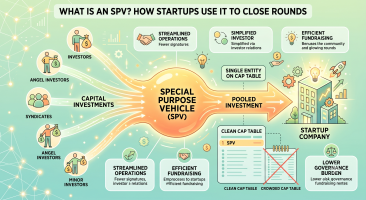
What Is an SPV? How Startups Use Special Purpose Vehicles to Close Rounds
The Funding Structure More Startups Are Using
A Special Purpose Vehicle, commonly called an SPV, is a legal entity — typically an LLC — created specifically to pool capital from multiple investors into a single investment. Instead of having 20 angel investors appear individually on your cap table, an SPV consolidates them into one line item.
SPVs have become a preferred structure for seed and pre-seed rounds because they simplify cap table management, reduce the administrative burden on founders, and allow lead investors to bring in a co-investment group without complicating the deal.
How an SPV Works in Practice
Here is the basic mechanics of an SPV transaction:
- A lead investor (the SPV manager) identifies a deal they want to do
- They create an LLC (the SPV) that will hold the investment
- They invite limited partners — often angels, family offices, or smaller funds — to invest into the SPV
- The SPV pools all capital and invests as a single entity into the startup
- The startup receives one check and adds one new shareholder to the cap table
According to AngelList's SPV documentation, SPVs can be structured and deployed in as little as 48 hours using modern transaction infrastructure — far faster than traditional fund structures.
Why Founders Prefer SPVs
Clean Cap Tables
A company with 40 individual angel investors on the cap table faces coordination challenges at every future financing event. Every new investment round requires pro-rata calculations, waiver signatures, and notice obligations to each shareholder. An SPV consolidates 40 voices into one.
Faster Closes
When a lead investor is ready to close and wants to bring in co-investors, the SPV structure allows the deal to close on the lead's timeline without waiting for every co-investor to individually negotiate terms.
Access to Larger Check Sizes
Founders targeting a $500K check but facing investors with $25K-$50K allocations can use an SPV to aggregate smaller checks into a single, deal-moving contribution.
SPV vs. SAFE vs. Priced Round: Which Is Right for You?
These are not mutually exclusive. A founder might raise a $500K SAFE from institutional angels, alongside a $250K SPV from a lead investor's co-investment group. Stripe Atlas's startup legal guide provides a useful comparison of structures at the seed stage.
The key question is who bears the administrative burden. SAFEs are the simplest instrument. Priced rounds offer the most protection. SPVs offer flexibility for syndicated deals where multiple investors want exposure to a single opportunity.
SPV Creation Without the Legal Complexity
Historically, creating an SPV required weeks of legal work and significant setup costs. Modern transaction infrastructure has changed this. Platforms like AngelLinx.ai include integrated SPV creation tools as part of their transaction infrastructure, alongside data rooms, escrow, and portfolio monitoring.
Founders do not need a separate law firm engagement to structure a co-investment vehicle when the infrastructure is embedded in their fundraising platform.
Is an SPV Right for Your Round?
If you have a lead investor who wants to bring co-investors, or if you are running a broader campaign and want to keep your cap table clean, an SPV is worth considering. The administrative overhead is low, the structural benefits are real, and the tooling to execute one has never been more accessible.
To explore integrated SPV creation and fundraising tools, visit AngelLinx.ai.